
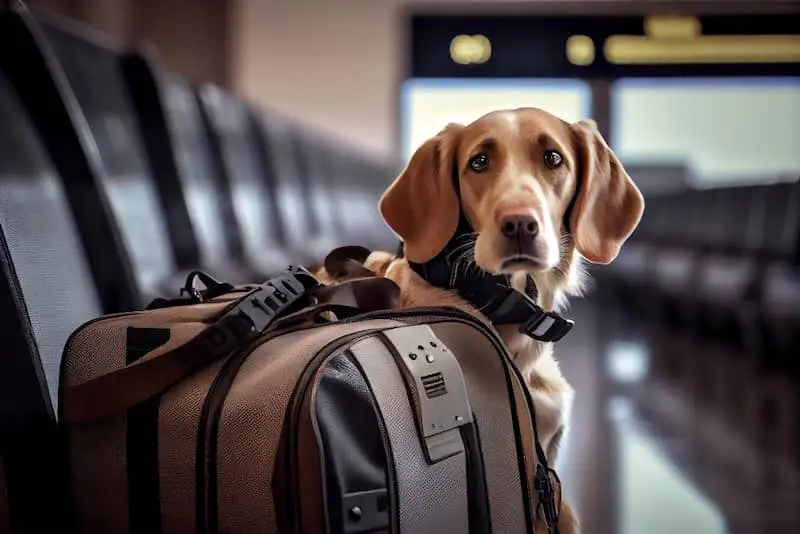
Traveling with pets gets complicated quickly, and that complexity only increases when you add international travel to the mix. You can’t simply book a seat and show up with a carrier. You have to deal with health certificates, airline rules, and even destination entry requirements.
But the biggest decision usually comes early: do you fly commercial or book a VIP private jet charter?
That choice shapes almost everything that follows. It affects where your pet can travel in the aircraft, how much routing flexibility you have, what documentation you need, and how much stress the day creates. If you understand the trade-offs, you can choose the option that fits your pet and travel route.
How Commercial and Private Pet Travel Differ
Commercial and private flights operate under very different systems. On commercial airlines, your pet is subject to rules and systems built for scale. The airline has fixed routes and policies, with limited room for exceptions. If your pet qualifies for in-cabin travel, the process can be manageable. If your pet doesn’t meet requirements or is headed to a destination with stricter import rules, the trip becomes more difficult.
Private travel gives you more control over the specifics. You can often avoid the pressure points that make pet travel harder, such as long airport layovers and crowded terminals. You may also be able to choose a more direct route or depart from a smaller airport, which can be helpful if your destination has strict entry requirements or your pet does not travel well in the cargo hold.
Routing Flexibility
A simple nonstop commercial flight can work very well for pet travel. If your pet can stay in the cabin and the destination rules are straightforward, a commercial flight may be the practical choice.
Problems arise when the trip requires connections or awkward transfer points. More airports mean more chances for delays. If your pet is already nervous or if your paperwork has a tight timing window, those extra steps add pressure and stress.
With private travel, you can often reduce or eliminate unnecessary routing complexity. A more direct trip means fewer transitions for your pet, which translates to less time spent adapting to unfamiliar environments. For many owners, that is where the value lies.
Stress and Comfort
When people talk about travel comfort, they often mean your comfort. But your pet’s comfort matters just as much, and it affects their well-being and behavior throughout the trip. A stressed animal may refuse food or water or become harder to manage in the unfamiliar pace of airport handling.
Commercial travel can still be safe and well-managed, especially for calm pets or simple itineraries. However, private travel tends to reduce stressors such as noise and crowding. The airport experience is usually quieter. Boarding is more controlled. The cabin environment is easier to manage.
That does not mean private is automatically the right answer. It means you should honestly assess your pet. A seasoned traveler in a carrier is one thing. An older dog with anxiety or a large breed with cargo concerns is another.
Rules and Restrictions
Private aviation gives you more flexibility, but it does not remove requirements from your flight. Some rules, such as cabin access, are set by the airline. However, other regulations depend on external factors that need to be taken into account.
Cabin Access
Cabin access is one of the biggest dividing lines between the two options. On many commercial flights, small pets may travel in the cabin if they meet the airline’s size requirements and remain inside an approved carrier. On the other hand, larger pets often have to travel as checked baggage or cargo, if the airline allows it at all.
A private jet charter usually allows a far more direct arrangement. In many cases, your pet can remain in the cabin with you, reducing separation stress and giving you better control over the environment. That alone can be the deciding factor for many international trips.
Breed Rules and Cargo Limits
Commercial airlines often restrict certain dog breeds, especially flat-faced breeds like bulldogs and pugs, because they are more vulnerable to breathing issues in cargo conditions. Airlines may also temporarily suspend or limit pet cargo travel during periods of extreme heat or cold.
Private travel does not erase every challenge, but it does remove many airline-specific restrictions. You can often work around breed limitations or temperature-related embargoes through tailored routing and cabin arrangements designed with pets in mind.
If your pet cannot travel comfortably or safely under standard commercial cargo rules, private aviation can provide an alternative that prioritizes access and in-flight conditions in a way commercial schedules typically cannot.
Country Entrance Rules
In contrast to the previous rules, entry rules are set by the destination country, not the airline. You still need to handle vaccinations, microchip requirements, health certificates, import permits where required, and any applicable quarantine rules yourself.
Changing your flight type may not bypass these rules, but in some cases, the extra flexibility provided by private flights can help the process go smoother. Commercial flights may limit your routing options, which can create problems if a country accepts pet arrivals only at certain airports or during certain hours. Private travel can sometimes make that easier because you have more control over departure timing and airport selection.
Consider an Empty Leg
Empty leg jet charters can add another option if your timing is flexible and you don’t want to go all-out on a private flight. These are repositioning flights that would operate without passengers otherwise, which means they can sometimes offer access to private travel at a lower cost. For international pet travel, they can provide the same core advantages as private charters, including cabin access and a more controlled airport experience.
The tradeoff is predictability. Empty legs run on fixed schedules and routes that are set by someone else’s primary booking. That can make them harder to align with destination entry windows or specific arrival requirements. When the timing works, they can be a practical middle ground. When it doesn’t, the lack of flexibility becomes a limiting factor.
Start With the Pet, Not the Plane
There’s no universal right answer to which flight you should choose. Some trips fit cleanly into a commercial itinerary. Others don’t. The difference usually comes down to how your pet handles the experience.
If you have a small pet and the travel rules are simple, a commercial flight can work just fine. Add connections, tight timing windows, or a larger animal, and the equation shifts quickly. That’s where flexibility starts to matter. Private travel isn’t all about luxury in this context. It’s about control over the variables that actually affect the trip. If you can build the plan around what your pet needs and what will keep the trip moving smoothly, everything else will follow.