
Golf travel sounds simple until you start counting equipment. A full set of clubs in a travel case, plus shoes and a second pair for wet rounds, in addition to your standard luggage, takes up a lot of space. The extra gear can quickly become a major source of difficulty on an otherwise smooth trip. A private air charter that can seat everyone in your group may still struggle to carry the group’s baggage.
The problem lies in the size and shape of the baggage. Golf bags are awkward. They are long, bulky, and harder to stack than suitcases. When planning travel for your golf trips, your goal should be to choose an aircraft where your bags fit cleanly, without any unnecessary headaches.
Seating Doesn’t Equal Storage
Most people start their aircraft search by looking at seat counts. That’s a reasonable starting point, but it shouldn’t be the deciding factor. Passenger capacity indicates how many seats are available. It does not tell you how the baggage compartment is shaped, how large the door opening is, or how much usable space you have once you factor in normal luggage. When making your decision, the shape and size of the available storage matters more than the passenger capacity of the cabin.
You also need to account for the kind of golf travel you’re doing. A quick overnight trip with a carry-on and a soft case looks very different from a long weekend where everyone brings full luggage plus a hard travel case. If you want the trip to feel easy, you’ll want to err on the side of too much space, not too little.
Very Light Jets: For Small Trips
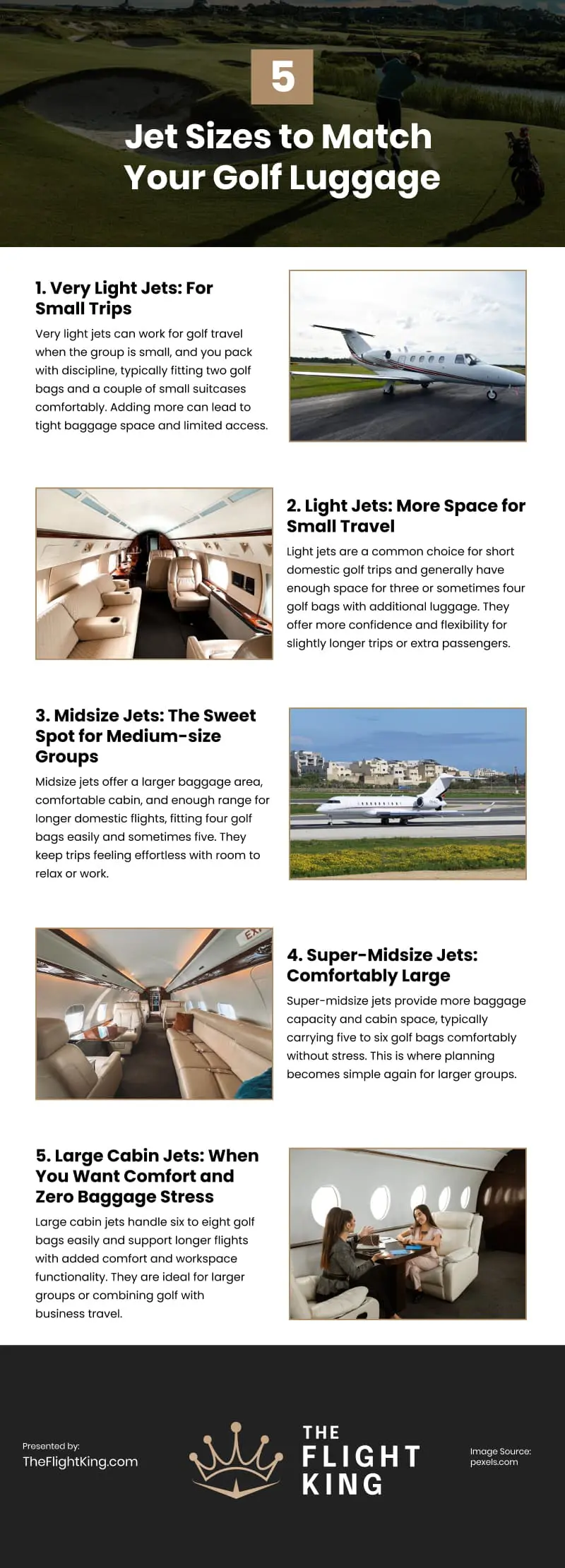
Very light jets can work for golf travel when the group is small, and you pack with discipline. In most cases, two golf bags plus a couple of small suitcases is where things feel comfortable. Once you try to add a third set of clubs and full luggage, you’re more likely to run into tight baggage holds or limited door access.
If you’re flying with one friend or colleague, this category can be a good fit. It’s also a category where “it should fit” becomes the most common phrase people regret. If you’re unsure, it may be better to go with something with a bit more margin for error.
Light Jets: More Space for Small Travel
Light jets are a common choice for short domestic golf trips, and they tend to handle golf bags better than very light jets. They generally have enough space for three, or sometimes four, golf bags with a reasonable amount of additional luggage.
If you’re planning on packing for a slightly longer trip or bringing an extra person or two with you, you may find that light jets offer a bit more confidence than lighter options. Having that little bit of extra space might be all it takes to make your weekend trip run smoothly.
Midsize Jets: The Sweet Spot for Medium-size Groups
Midsize jet charters land in the sweet spot for many golf groups because they offer a larger baggage area, a more comfortable cabin, and enough range for longer domestic flights. Four golf bags generally fit smoothly with standard luggage, and five can work depending on luggage size and the specific aircraft.
A midsize jet tends to keep trips feeling effortless for small groups with reasonable baggage. You can bring your clubs, pack what you want, and still have a cabin that feels like a place to relax or work.
Super-Midsize Jets: Comfortably Large
Super-midsize jets can be an excellent choice for golf travel because they offer more baggage capacity and cabin space without jumping all the way to large-cabin pricing. For many configurations, you can comfortably carry five to six golf bags with luggage.
Super-midsize jet charters are typically the point where you stop worrying about whether an extra pair of shoes or a second jacket tips the balance. If you are a group of six and everyone is bringing a full set, this category is often the first option where planning becomes simple again.
Large Cabin Jets: When You Want Comfort and Zero Baggage Stress
When certainty matters, large cabin jets leave no room for doubt. If you’re traveling with a larger executive team, bringing multiple golf bags, and still expect the cabin to function as a workspace, large cabin aircraft make that possible. These aircraft typically handle six to eight golf bags well, and some configurations can accommodate more while still keeping luggage organized and accessible.
This category also better supports longer flights with less fatigue. If you’re combining golf with meetings or you’re flying far and playing quickly after arrival, the added comfort and space can help you feel rested when you reach the first tee.
How to Choose the Right Jet Category Upfront
You can simplify the decision by building your aircraft choice around the bags first, then confirming passenger comfort. A simple planning strategy may look something like this:
- Count golf bags first, then add luggage. You want space for both without forcing a cabin workaround. If you’re bringing four golf bags plus four suitcases, plan for an aircraft that can carry them all.
- Determine whether anyone will pack heavily. One person with oversized luggage can change the whole equation. If you know that’s likely, make sure your aircraft has a little wiggle room.
- Protect the cabin experience. If you’re paying for private aviation, you want the cabin to feel like part of the trip, not a place where baggage spills into your space. For the best comfort, plan as if it’s not an option.
This approach keeps you from making last-minute changes at the airport and helps you avoid the frustration of discovering limits when the day is already in motion.
Flights that Work for Your Travel
Golf trips feel better when the travel day stays invisible. You arrive close to the course, step out with your clubs, and start the trip with energy rather than logistics fatigue. Choosing the right jet category is one of the easiest ways to make that happen.
If you plan around real baggage behavior rather than seat numbers, more often than not you’ll end up with an aircraft that fits your group comfortably and keeps the trip clean from tarmac to tee box.
Video

Infographic
Planning a golf trip requires more than enough seats—golf bags can strain the capacity of smaller aircraft. Choosing the right private charter means balancing passenger count, luggage capacity, comfort, and range. This infographic shows jet sizes that can accommodate your golf gear.